

Recognition of a Ukrainian Dental Qualification in Lower Saxony, Germany, European Union
Manuscript received 02 October 2026
Revised following the first round of review 01 November 2026
Revised following the second round of review 22 November 2026
Accepted following the third round of review 23 November 2026
Three external reviewers from German federal states such as Hessen, Brandenburg, and Saarland.
Available online 25 November 2026
J Diagn Treat Oral Maxillofac Pathol 2026;11: 100328
DOI: https://doi.org/10.23999/j.dtomp.2026.11.100328
Under a Creative Commons license
HOW TO CITE THIS ARTICLE
Al-Makhamid NS. Recognition of a Ukrainian dental qualification in Lower Saxony, Germany, European Union. J Diagn Treat Oral Maxillofac Pathol. 2026;10(11):100328.

KEY WORDS
Dental education, foreign qualification recognition, approbation, Ukraine, Germany, Lower Saxony, Gutachtenverfahren, Fachsprachprüfung, dental licensing
ABSTRACT
This article describes the personal experience of a Ukrainian-trained dentist in obtaining German Approbation in Lower Saxony. It outlines the recognition process, including language requirements, document assessment, professional examinations, and additional qualifications. The challenges encountered and recent legislative changes effective November 1, 2026, are also discussed. The article aims to provide practical insights for internationally trained dentists seeking professional recognition in Germany.
To the Editor in Chief,
I would like to share my personal experience as a dentist trained in Ukraine who graduated in 2018 from Kyiv Medical University and obtained a German dental license (Approbation) in 2026. This article describes my individual experience of the dental licensing process in Lower Saxony, Germany, including the main administrative steps, academic assessment, language requirements, and challenges encountered along the way. It may provide practical insights for other internationally trained dentists seeking professional recognition in Germany.
After completing my dental degree (Fig 1A), I completed the mandatory two-year postgraduate dental internship (Internatura) in Ukraine in 2020 and received the corresponding certificate (Fig 1B).
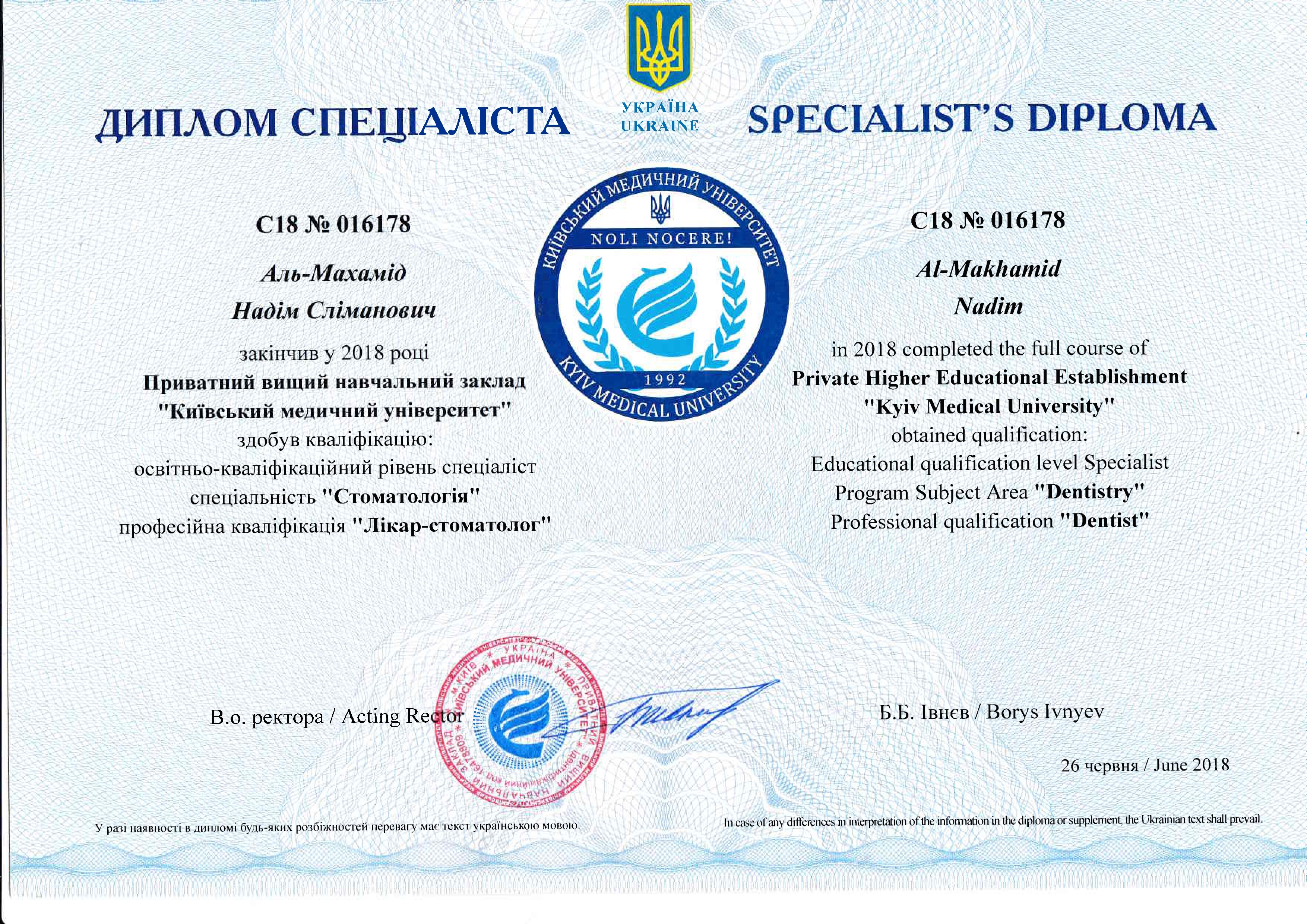
FIGURE 1.A Original Specialist’s Diploma issued by the Private Higher Educational Establishment “Kyiv Medical University” on June 26, 2026.
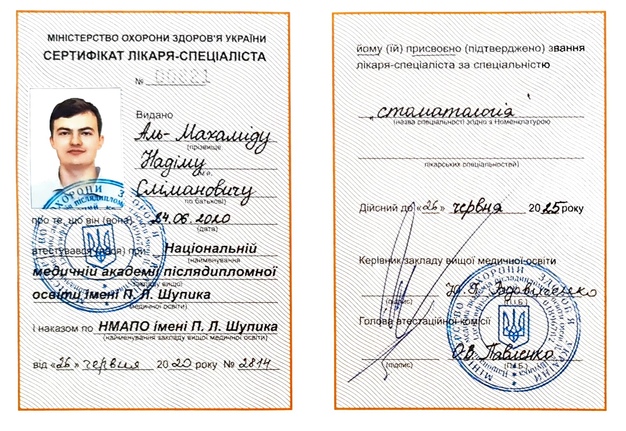
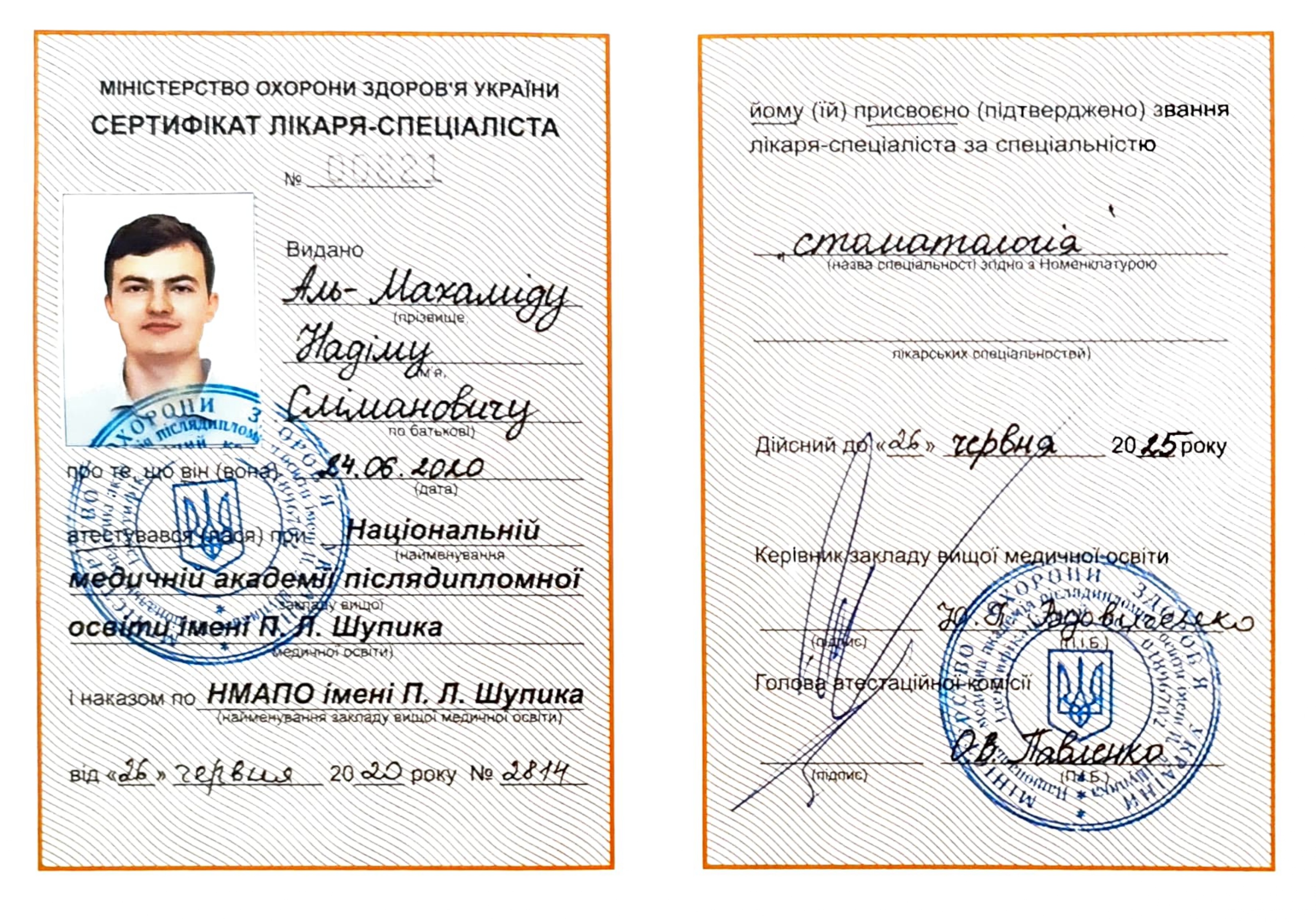
FIGURE 1.B Certificate issued by the Shupyk National Medical Academy of Postgraduate Education (currently known as Shupyk National Healthcare University of Ukraine) confirming completion of the dental internship (Internatura) in Ukraine.
I then worked as a dentist in Ukraine until I left the country in 2022 because of the war and arrived in Siegen, North Rhine-Westphalia, Germany. At that time, I did not speak German. Although I had completed my dental education and gained professional experience in Ukraine, I was not yet authorized to practice dentistry in Germany. Following my arrival in 2022, I was granted temporary protection under Section 24 of the German Residence Act (AufenthG) due to the war in Ukraine. This status allowed me to reside and work under the applicable conditions. My first priority was therefore to learn the language. In August 2022, I was placed in a B1-level German course and completed B1 in November 2022. I subsequently prepared for the B2 level, which was required to initiate the professional recognition process. Adequate German language skills were also essential for communicating with patients, colleagues and authorities.
In March 2023, I began an official Bundesfreiwilligendienst (Federal Voluntary Service) at Jung-Stilling Hospital in Siegen, where I worked as a nursing assistant for approximately 40 hours per week. From March to July 2023, I was assigned to the Department of Internal Medicine. This was not a Minijob or an informal assistant position, but an official voluntary service based on a formal agreement with the hospital. I received a monthly allowance of €450 Euro, as well as supplementary Bürgergeld from the Jobcenter to support my living expenses. The Bundesfreiwilligendienst agreement itself had no specific impact on my residence status.
The work was challenging, particularly psychologically. Having completed my dental education, I found it difficult to adjust to performing basic nursing tasks and providing personal care to patients while being unable to work as a dentist. This experience represented a significant change in my professional role and required patience and persistence. At times, the difference between my previous professional training and my responsibilities in Germany was difficult to accept. Nevertheless, I viewed this period as an opportunity to improve my language skills, understand the German healthcare system, and gain experience working with patients and colleagues. These experiences helped me maintain my motivation to continue the recognition process and work towards returning to my profession.
After five months in the Department of Internal Medicine, I spent two months in the Department of Oral and Maxillofacial Surgery (MKG, short for Mund-, Kiefer- und Gesichtschirurgie) at the same hospital. Although the department was more closely related to my dental background, I continued to perform nursing-assistant duties.
After this period, I completed a one-month observership at the hospital's Maxillofacial Surgery dental center.
Upon completion of my Bundesfreiwilligendienst, I received an official certificate confirming my participation. I also received a certificate for my one-month observership at the dental center of the Department of Oral and Maxillofacial Surgery. However, neither certificate played a role in the formal recognition of my dental qualification. Both experiences were valuable primarily for my personal and professional development.
In November 2023, I started working at Eichenklinik Kreuztal under an official part-time employment contract, with a working schedule of 23 hours per week. I got this job through an online application. I worked in the field of professional dental cleaning (PZR — Professionelle Zahnreinigung), communicating with my own patients in German. Since I had not yet obtained German Approbation or a temporary professional permit (Berufserlaubnis), I was not legally authorized to perform independent dental treatments [1]. Therefore, my professional activities were limited to professional dental cleaning. This position allowed me to maintain contact with patients, apply my dental knowledge within the permitted scope of my work, and further improve my professional German language skills. Although this experience did not contribute directly to the formal recognition of my dental qualification, the practical experience I gained was beneficial when applying for subsequent positions in the dental field. During this period, I also achieved B2 after attending a German course at DEKRA.
At the same time, I was collecting the documents required for the recognition of my Ukrainian dental qualification, following the official checklist published by NiZzA [2]. Documents obtained from Ukraine had to be apostilled and translated into German by a sworn translator in Germany. An exception was the Ukrainian criminal record certificate, which did not require an apostille but still had to be translated into German by a sworn translator. By late 2023, I had already collected most of the necessary documentation.
At the end of May/beginning of June 2024, I moved to Lüneburg in Lower Saxony, for family reasons. I found my position at the dental practice of Dr. Schlendermann through a personal encounter. I accompanied my mother to the practice for her appointment and asked whether additional staff were needed. Dr. Schlendermann invited me to submit an application, which subsequently led to my employment as a dental assistant. At this stage, my primary role was assisting with dental procedures. I continued collecting the remaining documents required for the recognition procedure. Initially, I worked 21.5 hours per week. After completing the preparation course for the Dental Professional Language Examination (Fachsprachprüfung) [3] in August 2025, I increased my working hours to 38 hours per week.
After collecting and preparing all the required documentation, I submitted my application for recognition in December 2024 to the Niedersächsischer Zweckverband zur Approbationserteilung (NiZzA), the competent authority responsible for dental licensing in Lower Saxony [2]. Although the general legal framework for the recognition of foreign dental qualifications is established at the federal level, administrative procedures and document requirements may vary between federal states. Therefore, the experience described in this article specifically concerns the recognition process in Lower Saxony and may not be directly applicable to other federal states.
I received confirmation that my documents had been received. This confirmation also enabled me to enrol in a preparation course for the Dental Professional Language Examination (Fachsprachprüfung) [3].
In March 2025, I received a letter from the authority in Hannover informing me that a Reference Qualification Assessment was required. The purpose of this assessment was to verify whether my university had the relevant accreditation at the time of my graduation in 2018. The assessment was conducted in Bonn and took approximately seven months. In September 2025, I received confirmation that the relevant accreditation had been established and that the recognition procedure could continue.
Meanwhile, I continued working at Dr. Schlendermann's dental practice and attended a specialized preparation course for the Dental Professional Language Examination (Fachsprachprüfung) from March to September 2025. The course focused on dental history-taking, professional terminology, patient consultations and explanations, dental reports, clinical documentation, and handover discussions with colleagues. The course fees were fully covered by the Jobcenter. I took the examination in March 2026 and passed. By that time, I was no longer receiving support from the Jobcenter and therefore paid the examination fee myself. The examination was a stressful but ultimately manageable experience.
After passing the Dental Professional Language Examination (Fachsprachprüfung), I received a temporary professional permit (Berufserlaubnis) [4] and was employed by Dr. Schlendermann as a Preparatory Dentist (Vorbereitungsassistent). Unlike the Approbation, which grants full professional authorization to practice dentistry in Germany, the Berufserlaubnis is a temporary permit subject to specific legal conditions and restrictions. In my case, I was required to work under the supervision of another dentist and was not authorized to practice independently. The scope, duration, and conditions of a Berufserlaubnis depend on the applicable legal provisions and the terms of the individual permit [4]. Therefore, such a permit should not be assumed to authorize dental practice in another federal state without confirmation from the competent authority.
This was an important milestone because I could now officially treat patients within the scope of my professional permit.
However, the practice had only two dental treatment rooms and three dentists, which meant that I could not work exclusively as a dentist. In addition, a member of the prophylaxis team had left the practice, and I was asked to take over her professional dental cleaning duties. I therefore combined professional dental cleaning and prophylaxis with the treatment of patients.
The initial expert assessment dated May 19, 2026, identified deficiencies in ten subjects: orthodontic preclinical studies and prevention; orthodontic diagnosis and treatment; clinical dental materials science; medicine and dentistry of ageing and older adults; oral medicine and systemic aspects; pharmacology and toxicology; radiology; preclinical restorative dentistry and integrated restorative dentistry course; preclinical prosthodontics and integrated prosthodontics course; and dental diagnostics and treatment planning.
I was given approximately three months, until the end of August 2026, to provide additional evidence addressing these differences.
The expert assessment (Gutachtenverfahren) involved comparing my Ukrainian dental education with the corresponding German requirements, including the subjects covered and the theoretical and practical training hours completed in each discipline. The aim was to identify substantial differences between the two curricula. However, despite searching for further information during the recognition process, I was unable to find publicly available official guidance explaining the exact methodology used by the experts to conduct this comparison. Therefore, I can describe the assessment and its outcome from my personal experience, but not the specific criteria or weighting applied by the assessor.
During these three months, I undertook extensive additional work to address the deficiencies identified in the expert assessment. I requested an expanded curriculum from my Ukrainian university covering the relevant subjects. In addition, I completed 118 online continuing professional development courses in German that were recognized by the Dental Chamber of Lower Saxony (Zahnärztekammer Niedersachsen) and awarded continuing medical education (CME) credits. I also attended an additional offline, in-person course in pharmacology in Bielefeld. I obtained certificates for all 119 courses and submitted them to the competent authority as supporting evidence of my additional professional education. When planning my online courses, I respected the Dental Chamber’s limit of eight CME credits per day. I also obtained an employment certificate from my employer documenting my professional experience and knowledge in the relevant subjects. I submitted the collected documentation to the expert assessor in Hannover at the end of August 2026.
The response arrived in less than two weeks. After reviewing the additional evidence, the assessor concluded that my dental education no longer showed substantial differences compared with the corresponding German dental education and that equivalence had therefore been demonstrated [5].
In Germany, applicants with foreign dental qualifications may choose between two recognition pathways: the Kenntnisprüfung (knowledge examination) and the Gutachtenverfahren (expert assessment procedure). The Kenntnisprüfung assesses professional knowledge and clinical competence through an examination. The Gutachtenverfahren, in contrast, evaluates the applicant's dental education and supporting documentation in comparison with the German dental curriculum. I was able to choose between these two pathways and decided in favor of the Gutachtenverfahren because I preferred to have my academic education and additional professional qualifications assessed on the basis of documentary evidence. This account describes my individual experience in Lower Saxony and should not be interpreted as the standard pathway for every internationally trained dentist. The applicable procedure and requirements may depend on the individual case and the assessment by the competent authority.
A few final documents were still requested. I obtained and submitted them within approximately one week. Shortly afterwards, in September 2026, I received my German dental licence (Approbation) (Fig 1C).
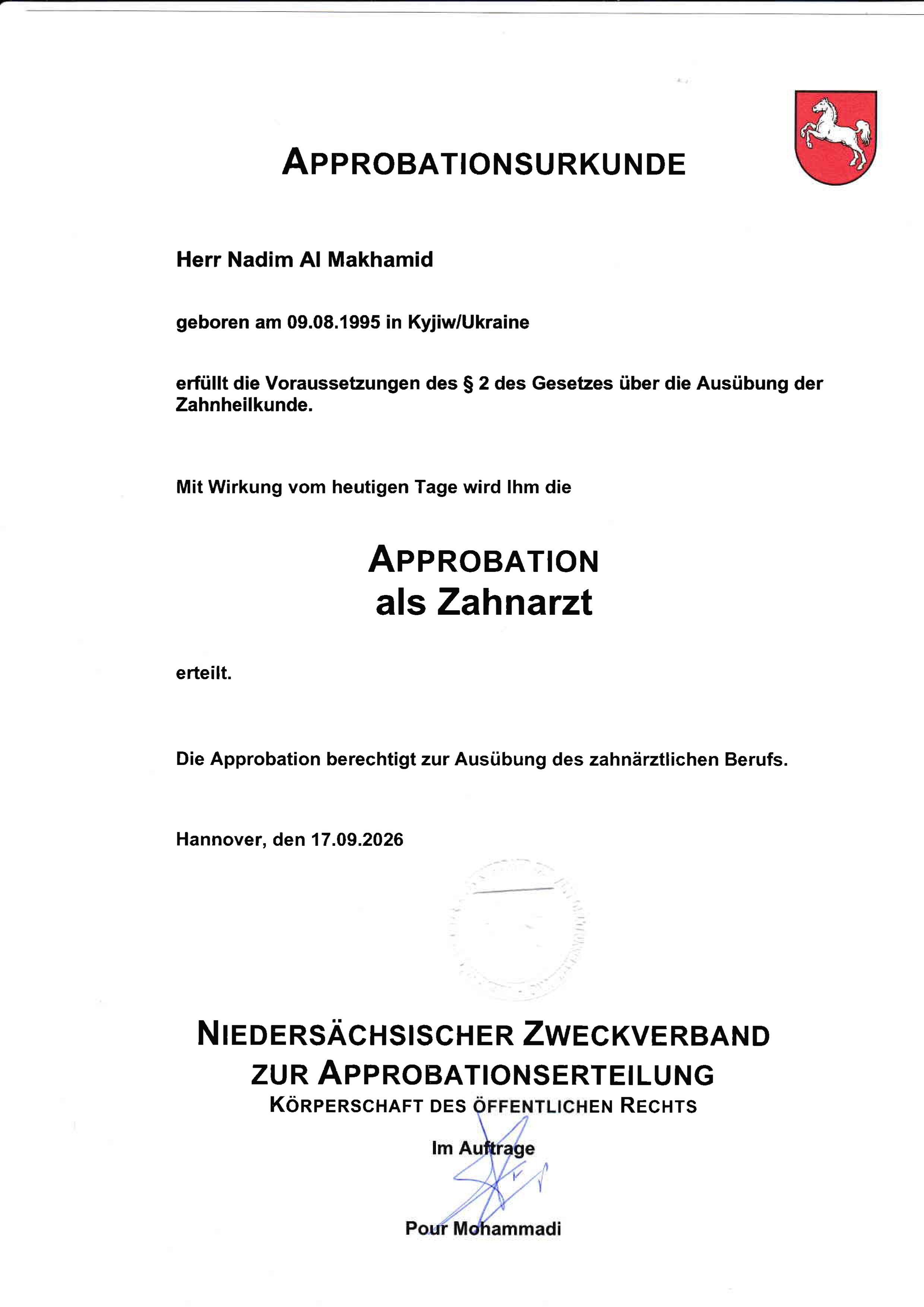
FIGURE 1.C License to practice dentistry (Approbation als Zahnarzt) issued in Hanover on September 17, 2026. Hanover is the capital of the federal state of Lower Saxony (Niedersachsen), Germany, EU. An Approbationsurkunde is the official German certificate granting an unrestricted, permanent license to practice a regulated medical profession, such as a doctor, dentist, or pharmacist.
At the time I was still employed and working under my temporary professional permit (Berufserlaubnis). From the date the Approbation was granted, I was authorized to practice dentistry on the basis of my full professional license rather than the temporary permit.
The recognition process also involved a considerable financial burden. Because it lasted approximately four and a half years and required numerous documents, translations, administrative procedures, assessments, examinations, and continuing professional development courses, I estimate that my total expenses were approximately €5,000–6,000 Euro. This figure is an approximate personal estimate, as I had to pay many separate invoices in both Ukraine and Germany and cannot reliably reconstruct the exact total. Initially, I received support through the Jobcenter. However, after I accepted a position at Dr. Schlendermann’s dental practice, I deregistered from the Jobcenter and subsequently covered the costs of the recognition process myself. My employer did not cover these expenses. Financial support and the coverage of recognition-related costs may depend on an applicant’s individual circumstances and eligibility.
From my arrival in Germany in the first quarter of 2022 to obtaining the Approbation in September 2026, approximately four and a half years had passed. This experience illustrates that recognition of a foreign dental qualification is not simply an administrative procedure involving the submission of a diploma. For internationally trained dentists, it can involve several years of language development, professional adaptation, academic verification and additional education.
On November 1, 2026, new legislation concerning the recognition of foreign healthcare qualifications entered into force in Germany [6]. Under the revised regulations, the knowledge examination (Kenntnisprüfung) has become the standard recognition pathway, while applicants may still request a documentary-based equivalence assessment (Gleichwertigkeitsprüfung). Applications submitted before this date remain subject to the previous legal framework. Therefore, the procedure described in this article reflects the regulations applicable to my application, submitted in December 2024.
Declaration of Interests: The author has no conflicts of interest to declare.
Fundings: No funding was received for this study.
Peer-Review: Externally peer-reviewed.
AI Statement: Google AI was used for language editing, English proofreading, and assisting in drafting the abstract and keywords. The author reviewed and approved the final manuscript and remains responsible for its content.
References (6)
-
Bundesministerium der Justiz und für Verbraucherschutz. Gesetz über die Ausübung der Zahnheilkunde (§ 18) [Act on the Practice of Dentistry, Section 18]. Bundesministerium der Justiz und für Verbraucherschutz. Accessed November 1, 2026. https://www.gesetze-im-internet.de/zhg/BJNR002210952.html
-
Niedersächsischer Zweckverband zur Approbationserteilung (NiZzA). Checkliste: Antragsunterlagen für die Erteilung der Approbation als Zahnarzt/Zahnärztin – Drittstaat [Checklist: Application Documents for the Granting of the License to Practice as a Dentist – Third Country]. NiZzA. Accessed September 29, 2026. https://www.nizza.niedersachsen.de/download/203129/Zahnaerztin_Zahnarzt_Checkliste_Approbation_Drittstaat.pdf
-
Niedersächsischer Zweckverband zur Approbationserteilung (NiZzA). Informationsblatt zur Fachsprachprüfung für Ärzte mit ausländischem Berufsabschluss [Information Sheet on the Specialist Language Examination for Physicians with Foreign Professional Degrees]. NiZzA; January 1, 2026. Accessed September 28, 2026. https://www.nizza.niedersachsen.de/download/201921
-
Federal Ministry of Justice (Germany). Gesetz über die Ausübung der Zahnheilkunde (ZHG), § 13 [Act on the Practice of Dentistry, Section 13]. Federal Ministry of Justice. Accessed November 1, 2026. https://www.gesetze-im-internet.de/zhg/__13.html
-
Federal Ministry of Justice (Germany). Approbationsordnung für Zahnärzte und Zahnärztinnen (ZApprO) [Licensing Regulations for Dentists]. July 8, 2019. Last updated November 21, 2024. Accessed September 28, 2026. https://www.gesetze-im-internet.de/zappro/BJNR093310019.html
-
Federal Ministry of Justice (Germany). Gesetz zur Beschleunigung der Anerkennungsverfahren ausländischer Berufsqualifikationen in Heilberufen [Act on Accelerating Recognition Procedures for Foreign Professional Qualifications in Healthcare Professions]. Bundesgesetzblatt (BGBl. I 2026, No. 225). Accessed November 22, 2026. https://www.recht.bund.de/bgbl/1/2026/225/VO.html